


Cangzhou Avant International Trade Co., Ltd. is one of the leading manufacturers and suppliers of post-tensioning anchor system in China. We are committed to providing high quality customized products with competitive price. Welcome to wholesale cheap post-tensioning anchor system in stock here from our factory. Also, free sample is available.
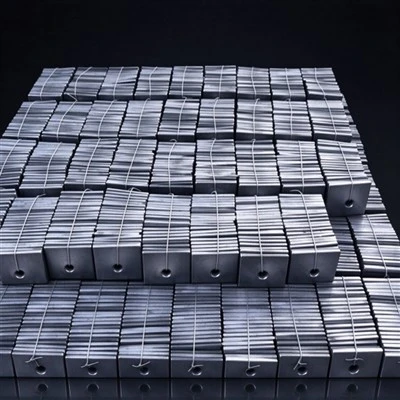
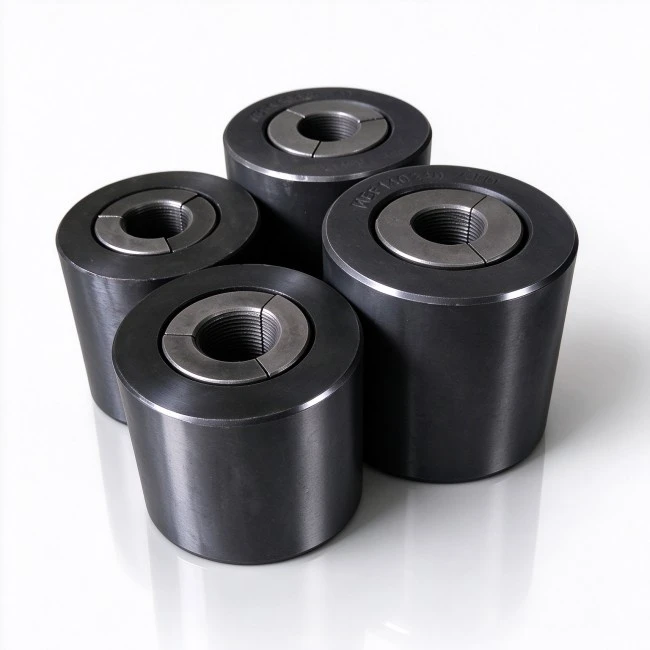
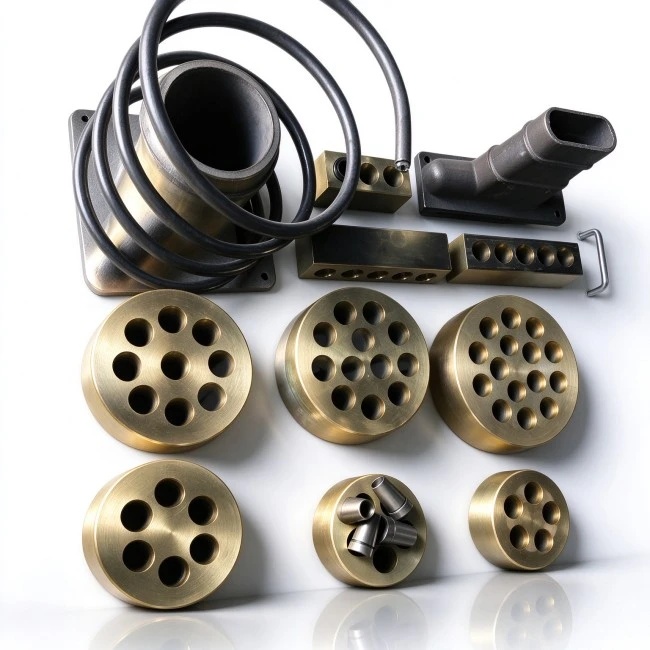
Our export-grade anchorage blocks are manufactured from high-quality alloy structural steels (such as 40Cr and 45#). They undergo precision machining and integral heat treatment, ensuring strict dimensional control of the internal conical bore and a precise fit with the matching wedges. In essence, this wedge-locking mechanism securely grips the steel strands after tensioning, ensuring stable transfer of prestress to the concrete component. During manufacturing, we strictly control the surface finish of the conical bore to minimize friction loss during tensioning, guarantee anchorage efficiency that meets both national and international standards, and mitigate risks associated with long-term stress decay. The products maintain stable mechanical performance under both sustained static loads and dynamic loading conditions, such as those experienced by bridges subject to repeated traffic loads.
Production complies with the GB/T14370 national standard and aligns with the JT/T329 (highway) and TB/T3193 (railway) standards, satisfying third-party testing requirements for overseas projects. Our product range covers standard round anchorage blocks (from single-hole to multi-hole configurations) and flat anchorage blocks, accommodating the most common prestressing strand diameters on the market, such as Φ12.7mm, Φ15.2mm, and Φ17.8mm.
We offer flexible hole configurations-ranging from 1 to 55 holes-to suit various applications, from small precast beams to the high-tonnage tensioning requirements of large box girders and continuous beams.
Regarding performance evaluation, international projects typically adhere to rigorous testing standards. Taking the Chinese national standard GB/T 14370-2015 as an example, it establishes clear quantitative requirements for the static load anchoring performance of prestressing anchorages: the anchorage efficiency coefficient (ηa) must be ≥0.95, and the total strain at ultimate tensile load (εapu) must be ≥2.0%. This means that in tests simulating ultimate operating conditions, the anchorage assembly must not only avoid failure due to slippage or fracture but also ensure that the prestressing tendon can achieve at least 95% of its theoretical strength. Furthermore, for bridge structures subject to dynamic vehicle loads, anchorages must pass fatigue load tests involving up to 2 million cycles to verify their fatigue resistance under long-term cyclic stress.
Even the highest-quality product cannot deliver its designed performance without proper installation practices. Field feedback indicates that the following two points are frequently overlooked:
First, steel strands should be cut using an abrasive saw; the use of electric arc welding or oxy-acetylene cutting is strictly prohibited. High temperatures alter the microstructure at the ends of the strands; the resulting brittle cut surfaces can easily damage the teeth of the anchorage wedges during tendon threading and tensioning, potentially leading to wire breakage.
Second, the compactness of the concrete beneath the anchorage is crucial. During tensioning, immense concentrated forces are transferred to the concrete via the bearing plate. Voids or honeycombing beneath the bearing plate can cause the plate to deform or sink, leading to anchorage misalignment. This, in turn, causes the prestressing tendon to bend abnormally and increases duct friction; in severe cases, it can cause the bearing plate to crack or shatter.
Although prestressing anchorages are small components, they serve as the critical link-the "throat"-connecting prestressing tendons to concrete structures. As manufacturers, we fully understand that every anchorage leaving our factory supports the span of a bridge or the height of a building. We are committed to providing reliable products through rigorous material control, precision machining, and comprehensive testing.

For engineering projects seeking a stable, long-term supplier, choosing a manufacturer with end-to-end quality control capabilities and transparency regarding technical standards offers far greater strategic value than merely comparing unit prices. We look forward to collaborating with colleagues in the global engineering community to build safe and durable infrastructure.
Hot Tags: post-tensioning anchor system, China post-tensioning anchor system manufacturers, suppliers, factory