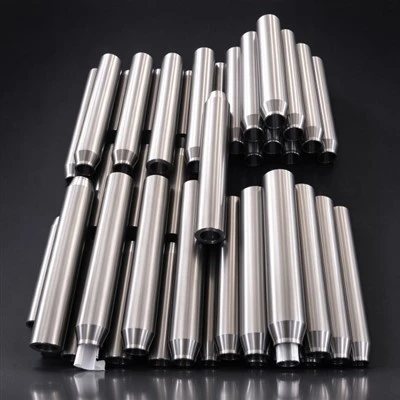

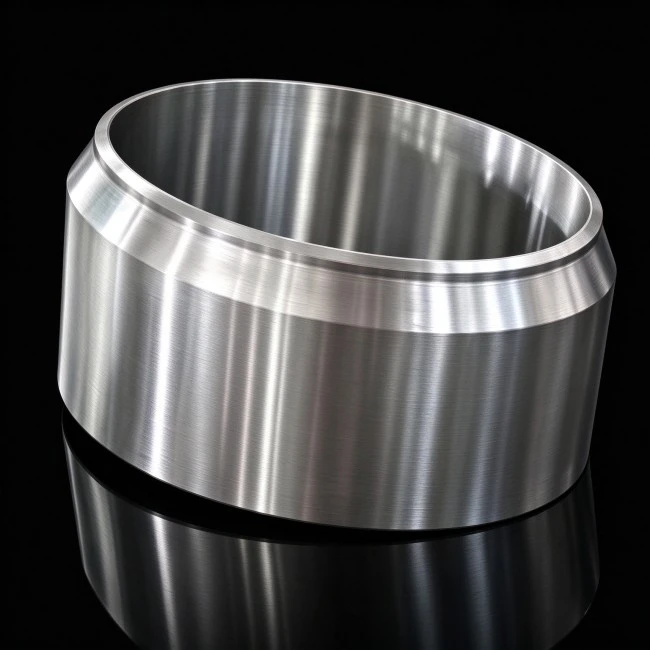


Cangzhou Avant International Trade Co., Ltd. is one of the leading manufacturers and suppliers of cylinder forging in China. We are committed to providing high quality customized products with competitive price. Welcome to wholesale cheap cylinder forging in stock here from our factory. Also, free sample is available.
In terms of the manufacturing process, the raw material (typically a steel ingot) undergoes a series of forging operations, including upsetting, punching, mandrel drawing, and finishing. This is followed by heat treatment, machining, and non-destructive testing. Because the component is forged as a single, unified piece, its internal structure is compacted; the grain structure becomes fine and uniform, with significantly fewer internal defects than rolled plate. This results in superior material toughness, fatigue resistance, and resistance to hydrogen embrittlement. In contrast, rolled-and-welded cylinders contain longitudinal welds, which often act as weak points under cyclic loading or in high-pressure hydrogen environments.
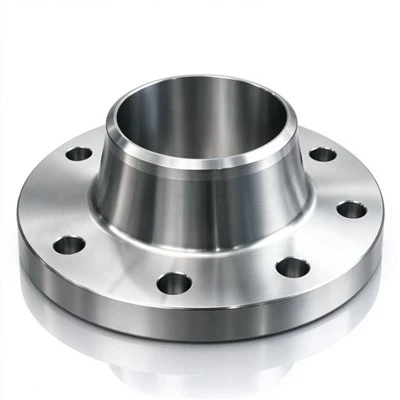
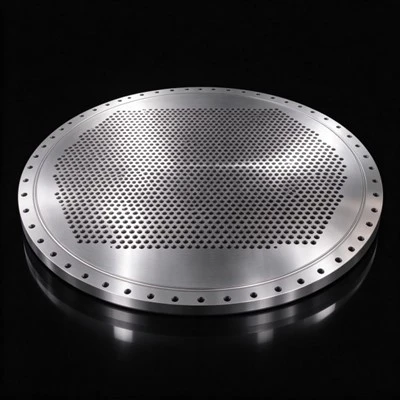
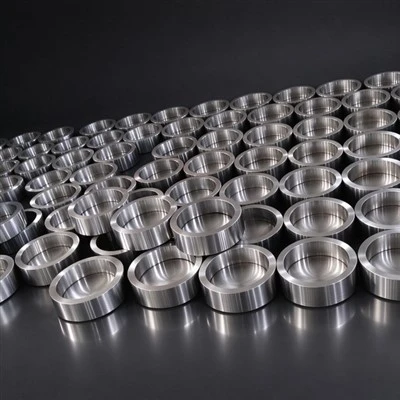
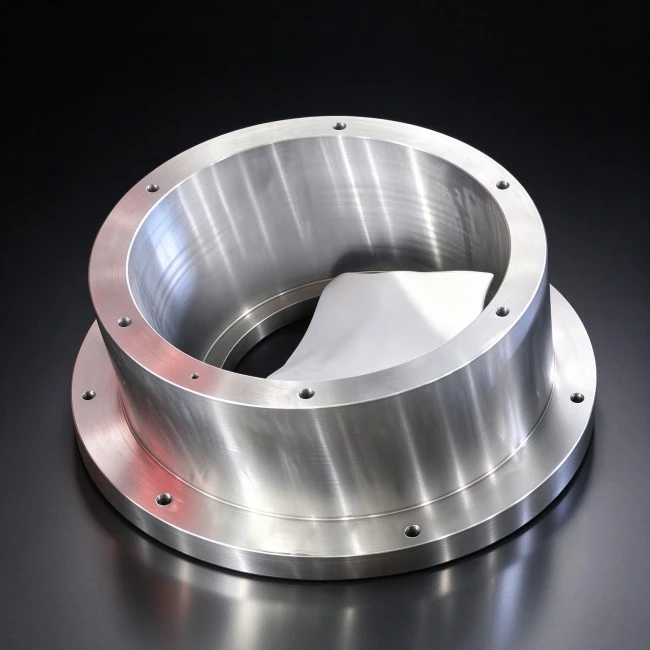
Cylinder forgings can be categorized in several ways. Based on structural design, they are classified into single-layer forged cylinders, multi-segment assembled cylinders, and integral flange-cylinder forgings (where the cylinder and end flange are forged as one piece, eliminating a circumferential butt weld). Based on application, they include shells for hydroprocessing reactors, high-pressure storage tanks, heat exchanger shells, thick-walled pipe segments, components for nuclear power equipment, and hydraulic cylinder barrels. For many overseas chemical and energy projects, cylinder forgings, tubesheet forgings, and flange forgings are often procured together as a complete set of pressure-bearing forged components.
The selection of material is determined entirely by the specific operating conditions. For standard, non-corrosive, low-to-medium pressure applications, forgings made of 16Mn or Q345R are commonly used. High-temperature boilers and steam equipment typically utilize chromium-molybdenum heat-resistant steels such as 15CrMo or 12Cr1MoV. In demanding environments involving hydrogen-such as hydroprocessing units-2.25Cr-1Mo and 2.25Cr-1Mo-V are the industry standards. For conditions involving chloride corrosion or exposure to acids and alkalis, 304, 316L, or 2205 duplex stainless steel forgings are selected. In extreme operating conditions, nickel-based or titanium alloy forgings may be required. Composite cylinder forgings are also used, featuring a high-strength alloy steel base with a corrosion-resistant layer weld-deposited on the inner surface-a solution that balances cost-effectiveness with corrosion resistance requirements.
Inspection and documentation are the areas where overseas projects impose the strictest requirements. Cylinder forgings are graded based on their intended use: Grade II for general pressure-retaining components, Grade III for critical components, and Grade IV for components in extremely demanding service. Grades III and IV require individual ultrasonic testing (UT) and mechanical property testing for every single piece. Our standard inspection package includes direct-reading spectral analysis for chemical composition, tensile, impact, and hardness testing, 100% UT, and surface non-destructive testing (MT/PT). For hydrogen-service applications, we also conduct HIC (hydrogen-induced cracking) and SSC (sulfide stress cracking) testing; for low-temperature applications, we perform a series of impact tests based on the minimum design temperature. Regarding documentation, we provide EN 10204 3.1 or 3.2 material certificates, heat treatment charts, heat/batch traceability records, NDT reports, and welding procedure qualification records-all supplied in both Chinese and English. We are experienced in working with third-party inspection agencies such as SGS, TUV, BV, and ABS, and we can coordinate production schedules to accommodate on-site client inspections.
When it comes to machining precision, there is no room for error during on-site assembly. Once a cylinder forging is machined, it must fit perfectly with flanges, heads, and nozzles. Even a slight deviation in roundness or end-face perpendicularity forces on-site welders to resort to grinding or shimming-actions that not only delay the project schedule but also compromise welding quality. For rough machining, we typically leave a finishing allowance of 1 to 2 mm. Critical dimensions are verified using a coordinate measuring machine (CMM) or a laser tracker-never a tape measure. Bevel angles and root faces are prepared in advance according to welding specifications, eliminating the need for on-site grinding; since turning over a large-scale cylindrical shell is a major undertaking, we ensure everything that can be prepared beforehand is completed.

If you represent an equipment manufacturer, an overseas EPC contractor, or a pressure vessel design institute, simply provide the inner diameter, wall thickness, length, design pressure and temperature, medium, and applicable standards. Our technical team will then evaluate the feasibility of forging, determine the raw material requirements, and develop a machining plan. We offer customization for non-standard dimensions, including cylindrical shells with varying wall thicknesses and lengths. We also provide anti-rust protection and secure, sea-worthy packaging, ensuring reliable lead times for bulk orders. Please send us your drawings and technical agreements so we can proceed with detailed cost estimation and production scheduling.
Hot Tags: cylinder forging, China cylinder forging manufacturers, suppliers, factory