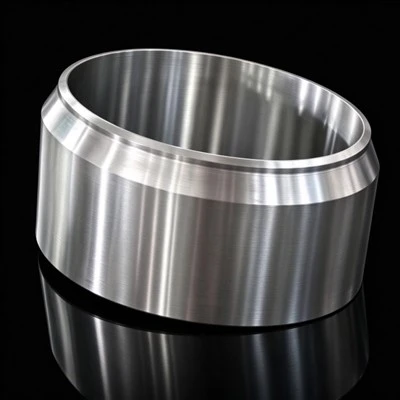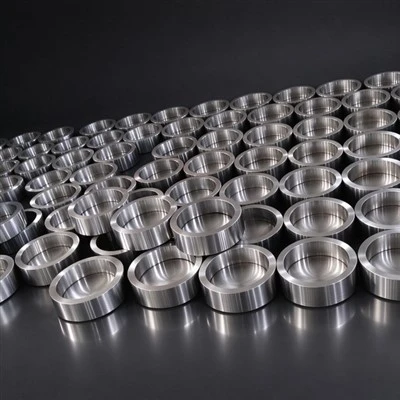

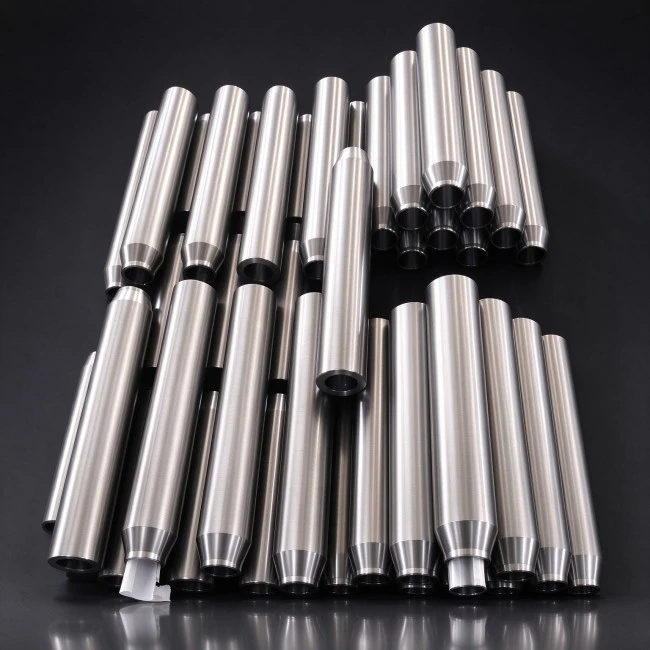


Cangzhou Avant International Trade Co., Ltd. is one of the leading manufacturers and suppliers of flanged shaft forging in China. We are committed to providing high quality customized products with competitive price. Welcome to wholesale cheap flanged shaft forging in stock here from our factory. Also, free sample is available.
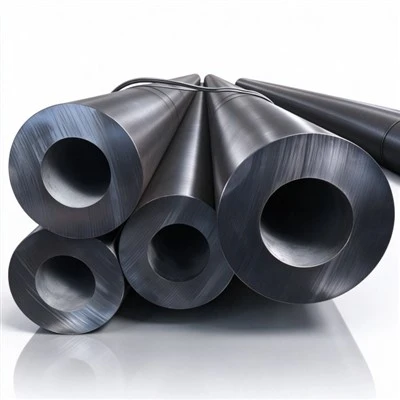
In terms of structural configuration, several types are common in the market. Stepped shafts-characterized by varying diameters along their length to accommodate gears and bearings-account for the highest volume; these are frequently used as pump shafts, motor shafts, and gear shafts for reducers. Simple, uniform-diameter shafts require minimal machining and are well-suited for conveying systems or basic transmission applications. Hollow shafts offer a lighter weight while maintaining equivalent strength and uniform wall thickness, making them the preferred choice for wind turbine main shafts, marine stern shafts, and high-speed motor shafts. There are also specialized shafts, such as splined shafts-designed to transmit high torque-and crankshafts, which must endure periodic impact loads; these are significantly more challenging to forge. For smaller, mass-produced components, closed-die forging is typically employed to ensure consistent blanks and minimize material waste. Conversely, for large-scale components, long shafts, or small-batch/custom orders, open-die (free) forging is generally used, as it offers greater process flexibility to accommodate non-standard, bespoke designs.
The choice of material is dictated entirely by the specific operating conditions, with a wide range of options available. For standard transmission applications with steady loads, 45# or 35# carbon steel offers the best cost-performance ratio. For heavy-duty applications requiring improved toughness through quenching and tempering, 40Cr, 35CrMo, and 42CrMo are the preferred choices-commonly used for shafts in mining, metallurgy, and construction machinery.
For transmission shafts requiring carburizing and quenching to enhance surface wear resistance, 20CrMnTi is frequently used. In environments prone to moisture, acids, or alkalis, 304 or 316L stainless steel is utilized. For demanding conditions involving high temperatures, high pressures, or hydrogen exposure, we can also supply forged shafts made from chromium-molybdenum steel or nickel-based alloys. Heat treatment processes-such as normalizing, quenching and tempering, carburizing, nitriding, or surface hardening-can be applied as needed to achieve specific hardness levels and mechanical properties.
Regarding production, the forging method for flanged shafts-whether open-die forging, impression-die forging, or closed-die forging-is selected based on component dimensions and batch size. Open-die forging offers high flexibility and is ideal for large-sized shafts produced in small batches, while impression-die or closed-die forging is better suited for larger production runs requiring high dimensional consistency. Following the forging process, components typically undergo heat treatment, rough machining, finish machining, and inspection. For critical components, we can also perform hardness testing, dimensional verification, or non-destructive testing (NDT) to ensure internal quality and machining precision.
Post-forging processes are equally critical. Long shafts are prone to bending during forging; therefore, straightening is required, followed by stress-relief heat treatment to eliminate residual forging stresses and prevent deformation during subsequent finish machining or actual service. We provide comprehensive machining services, including CNC precision turning, grinding, keyway cutting, spline machining, and drilling. We can supply either raw forgings or fully finished components. Regarding NDT, standard shafts undergo magnetic particle testing (MT) upon request, while critical components-such as main shafts, wind turbine shafts, or shafts for pressure vessels-are subjected to ultrasonic testing (UT) to detect internal defects like shrinkage cavities or inclusions.
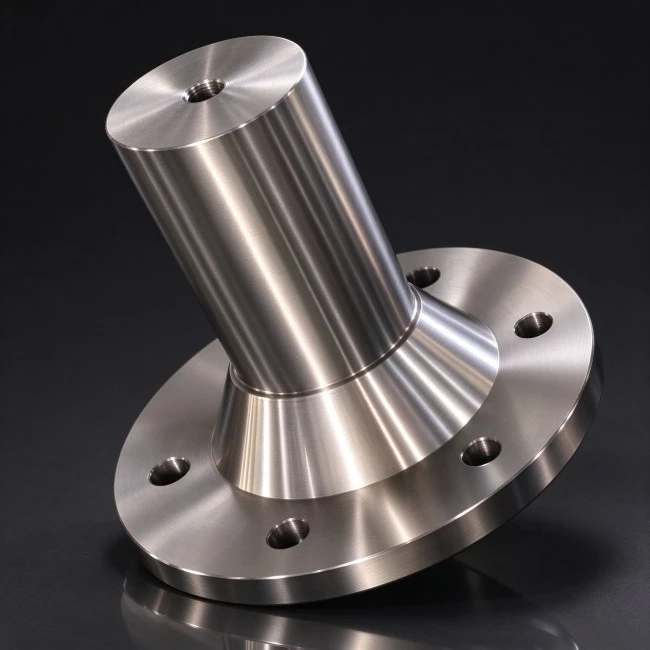
We support the customization of flanged shaft forgings based on your drawings or samples, offering a complete, integrated service that encompasses forging, heat treatment, and precision machining. Common products include stepped shafts, gear shafts, drive shafts, main shafts, pins, crankshafts, and various custom-shaped shaft components. Specifications-such as dimensions, materials, tolerances, heat treatment conditions, and surface finishes-can be discussed and confirmed based on your project requirements.

If you are looking for a reliable supply source for forged flanged shafts, please send us your drawings or technical specifications. We will provide a tailored production plan and quotation based on your required quantities, lead times, and technical process needs.
Hot Tags: flanged shaft forging, China flanged shaft forging manufacturers, suppliers, factory